Message from the Director
Thirteen federal agencies have together released the fourth National Climate Assessment, an exhaustive report on past, present, and likely scenarios of future climate change in the United States. Current conditions are the warmest in the history of modern civilization, with warming fueled by greenhouse gas emissions and other human activities. Extremes of both temperature and precipitation are becoming more common. The report also highlights sea level rise, and particularly its effects on increasing tidal flooding, along the East Coast. While this challenge is not considered to be as great in the Northwest, increasing wave height and power associated with extreme events is a concern in creating coastal flooding and erosion in our region. And along the coast in the Pacific Northwest, strong upwelling contributes to higher than average observations of ocean acidification. Here in Washington, we know well that large wildfires are increasing throughout the West, a trend expected to continue. Most wildfires in the U.S. are caused by humans, and human populations are increasing in landscapes that are becoming more flammable. Finally, the report reminds us that we are crossing many thresholds that have no precedent, and surprises will occur, an idea that is familiar to the scientific community and harder to communicate to our stakeholders more broadly. These large-scale changes challenge the research community not only to inform societal efforts to reduce greenhouse gas emissions, and thus avert the most extreme consequences of climate change, but also to devise and share innovations for mitigation and adaptation to the climate change already underway. Such use-inspired research is at the heart of CEREO projects such as FireEarth and Food-Energy-Water initiatives, and “actionable science” is the centerpiece of the Northwest Climate Science Center. We look forward to hearing more about how CEREO can support your creative ideas!
– Stephanie
Research News
Roundtable Research Discussions- Call for Topics
CEREO is soliciting ideas from WSU researchers who are interested in advancing their interdisciplinary, environmentally-related research ideas in Spring 2018. Roundtable discussions are extremely useful for exploring new ideas, building interdisciplinary teams, and identifying relevant funding opportunities. CEREO offers faculty support by 1) organizing and facilitating the roundtable discussion event, 2) helping faculty recruit potential team members, and 3) offering post-discussion support.
You can submit your idea at: http://cereo.wsu.edu/roundtable-ideas/. If you have questions, please email Julie Padowski (julie.padowski@wsu.edu).
CAS Small Grants RFP
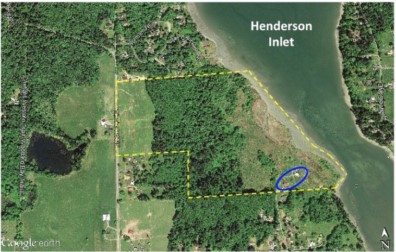
The College of Arts and Sciences (CAS) has announced a Request for Proposals for small grants to encourage use of the Meyer’s Point Environmental Field Station. WSU’s Meyer’s Point Environmental Field Station (MP), located just outside of Olympia, WA (https://cas.wsu.edu/meyers-point/), is poised to begin an era of growth and expansion that could enable it to become a leading environmental research, education and outreach center. Demonstrating significant usage of MP by WSU faculty and students will be a key to the success of establishing a Field Station and Marine Laboratory (FSML) program, where documenting significant usage is a requirement of all NSF grant applications.
This competition is open to all WSU faculty, irrespective of academic unit or campus.
An Open Forum to provide an overview and answer questions regarding the Meyer’s Point RFP will be held on Monday, December 4, 12:10-1:00 p.m. in Thompson Hall, room 301 with AMS arranged for WSU system-wide access.
Brief proposals should be submitted to Karla Shelton (karla.shelton@wsu.edu) by Monday, December 11, 2017. Questions should be directed to Dr. Steve Bollens, Director of Multi-Campus Planning and Strategic Initiatives, College of Arts and Sciences, at sbollens@wsu.edu or 360-608-6893.
USGS Climate Science Center- 2017 Fellows Selected
The Northwest Climate Science Center (NWCSC) is pleased to announce the first cohort of early career scientists into the NWCSC Fellowship Program for 2017, including two students from WSU. The NWCSC Fellowship Program aims to produce early career scientists skilled in creating and communicating actionable climate science in partnership with natural resource managers. The program supports graduate and postdoctoral research and provides training in the principles and practices of co-production of decision-relevant (“actionable”) science.
The new Department of the Interior’s Northwest Climate Science Center is a consortium led by the University of Washington in collaboration with Boise State University, University of Montana, Washington State University, and Western Washington University. The group was selected as the CSC host consortium after an open competition.
 Kimberly Cook, WSU Vancouver
Kimberly Cook is a PhD student in the School of Biological Sciences at WSU Vancouver (Faculty Advisor: Jonah Piovia-Scott). Cook’s research focuses on better understanding how changing temperatures, hydrologic regimes, and disease interact to influence population viability in the Cascades frogs (Rana cascadea). The goal of her research is to work in tandem with the U.S. Forest Service to inform management decisions and help conserve the aquatic resources that serve as critical habitat for declining amphibian populations.
 Travis King, WSU Pullman
Travis King is a MS student in the School of the Environment at WSU Pullman (Faculty Advisor: Daniel Thorton). King’s research seeks to evaluate the distribution and status of a climate sensitive and threatened species, the Canada lynx, to improve our understanding of lynx response to climate-dependent variables. His research is focused on developing large-scale, multi-species survey techniques, which produce information that can support species-level conservation in Washington at the state, federal, and tribal levels.
Other News
2nd Tri-State Food-Energy-Water Workshop
Stephanie Hampton from WSU, Chad Higgins from Oregon State University, and Andrew Kliskey from University of Idaho co-organized another workshop to build out new, collaborative, food-energy-water research proposals on 23-24 October 2017 in Hermiston, OR. This workshop supported 38 researchers in 5 teams explore a variety of social, technological, natural and physical science issues to tackle problems affecting regional economies and environmental and human health. The workshop was sponsored by the Offices of Research at WSU, OSU, and UI.
Tracey Holloway- Visiting Scientist

Tracey Holloway is a Professor in the Nelson Institute for Environmental Studies and the Department of Atmospheric and Oceanic Sciences at the University of Wisconsin-Madison. She leads an air quality research program in the Nelson Institute Center for Sustainability and the Global Environment (SAGE) geared to better understand links between regional air quality, energy, and climate. Dr. Holloway also is the team lead for the NASA Health and Air Quality Applied Sciences Team (HAQAST; 2016-2019).
Holloway’s seminar focused on two emerging trends in air quality analysis: energy modeling and satellite data. In both cases, new methods complement the approaches used by counties, states, and the federal EPA to achieve clean air goals, but neither methodology fits clearly into the regulatory framework of the Clean Air Act. Her talk provided an overview of current research projects applying these methods, and how we can better connect new science with air quality policy and planning.
This event was co-sponsored by CEREO and the WSU Entrepreneurial Faculty Ambassadors Program as part of the Innovation and Outreach Series.
UPCOMING OPPORTUNITIES
General Opportunities
Safeguarding Idaho’s Economy in a Changing Climate
November 16 & 17, 2017
Join in on a two-day conversation about Idaho’s changing climate designed to explore market-based solutions for safeguarding Idaho’s economy, health, landscape and lifestyle.
The statewide summit will be held at Boise State University, Idaho State University (ISU), and the University of Idaho (UI), November 16 (8:30 AM to 5:00 PM) and 17 (8:30 AM to 3:00 PM), with a reception on Thursday evening from 5:00 PM to 7:30 PM at the Boise State University Stueckle Sky Center.
The Molly K. Macauley Award for Research Innovation and Advanced Analytics for Policy
Short Pre-Proposals due December 5, 2017
(Invited) Final Proposals due February 28, 2018
seeking proposals for new research that will support and enhance the activities of the Consortium for the Valuation of Applications Benefits Linked to Earth Science (VALUABLES), a new consortium at RFF made possible through a partnership with the National Aeronautics and Space Administration (NASA). VALUABLES is focused on advancing innovative uses of existing methods and developing new techniques for valuing the information provided by Earth observations, especially those derived from satellites and aircraft.
For more information and to submit
Faculty Opportunities
National Geographic Requests for Proposals
As part of their investment in a healthier and more sustainable planet, the National Geographic Society has created a series of requests for proposals (RFPs) intended to focus our funding in science, education, and storytelling around certain key issues.
For detailed information about the grant application, see the How to Apply page. Please note: for Requests for Proposals, select Standard Grant in the application and complete the relevant section regarding RFPs.
January 3, 2018 (decision by April 30, 2018)
View current RFPs
The National Geographic Society, Grant Programs, cre@ngs.org
For more information on the National Geographic Grant Program
College of Arts and Sciences RFP for Meyer’s Point Environmental Field Station
The College of Arts and Sciences (CAS) has announced a Request for Proposals for small grants to encourage use of the Meyer’s Point Environmental Field Station. This competition is open to all WSU faculty, irrespective of academic unit or campus. An Open Forum to provide an overview and answer questions regarding the Meyer’s Point RFP will be held on Monday, December 4, 12:10-1:00 p.m. in Thompson Hall, room 301 with AMS arranged for WSU system-wide access.
Brief proposals should be submitted to Karla Shelton (karla.shelton@wsu.edu) by Monday, December 11, 2017. Questions should be directed to Dr. Steve Bollens, Director of Multi-Campus Planning and Strategic Initiatives, College of Arts and Sciences, at sbollens@wsu.edu or 360-608-6893.
Dept of Defense Environmental Research Program Funding Opportunities
The DoD has released the core solicitation statements of need for FY19, including areas of interest related to 1) environmental restoration, 2) munitions response, 3) resource conservation and resiliency, and 4) weapons systems and platforms. More details about specific proposal call areas can be found at: https://www.serdp-estcp.org/Funding-Opportunities/SERDP-Solicitations/Core-SONs. Pre-proposals are due 4 Jan 2018
USDA Funding Opportunity: Environmentally Friendly Pesticides
The U.S. Department of Agriculture’s (USDA) National Institute of Food and Agriculture (NIFA) announced funding available to research new, environmentally-friendly pesticides, and innovative tools and strategies to replace methyl bromide, an older treatment for pests. This year, NIFA’s Methyl Bromide Transition Program will award grants totaling $1.9 million for such research.
The deadline for applications is Jan. 30, 2018. See the request for applications for details.
Water Resources Research National Competitive Grants Program: Announcement No. G18AS00009 under Section 104(g)
Proposals are sought on the topic of improving and enhancing the nation’s water supply, including evaluation of innovative approaches to water treatment, infrastructure design, retrofitting, maintenance, management, and replacement; exploration and advancement of our understanding of changes in the quantity and quality of water resources in response to a changing climate, population shifts, and land use changes; development of methods for better estimation of water supply, both surface and groundwater, including estimation of the physical supply and of the economic supply of water; development and evaluation of processes and governance mechanisms for integrated surface/ground water management; and the evaluation and assessment of conservation practices.
For more information and to apply.
Student Opportunities
Chateaubriand Fellowship call for applications for 2018-2019
Complete applications must be submitted by January 16, 2018
This year, in support of the Make Our Planet Great Again Initiative launched by President Emmanuel Macron in June 2017, the Chateaubriand Program is offering additional fellowships for research projects related to Earth System Science, Climate Change and Sustainability, and Energy Transition.
Chateaubriand Fellowship 2018-2019 EN
Applicants interested in the Make Our Planet Great initiative should complete either the STEM or HSS Chateaubriand Fellowship application.