Message from the Director
Many environmental researchers and educators have heard of the National Ecological Observatory Network (NEON) over the past decade or more that it has been in planning and construction, and you may have heard that there are recent changes. I’ve been following the NEON process closely, as I think that NEON can be a real game-changer for ecology and other environmental sciences.
NEON is designed to be a continental-scale research platform for studying and forecasting the impacts of climate change, land-use change, and invasive species on ecological processes. With support and oversight from the National Science Foundation (NSF), NEON is currently under construction, expected to be fully operational in 2017. NEON sites across the Nation will serve public data, streaming from field instruments as well as hand-collected data on organisms and ecological processes, designed to address continental-scale ecological questions. NEON is an ambitious and novel large-scale project; nothing like it has ever been built. Accordingly, there have been many challenges along the way, resulting in a major rescoping of the project, and ultimately a change in leadership and management.
The change in structure is reinvigorating the discussions around NEON, and galvanizing the environmental community to engage more strongly with NEON’s future. Recently, NSF announced that Battelle was chosen to take over management of the NEON project. While the specifics of management structure have yet to be announced, NEON has visibly maintained its momentum in construction and other activities during the transition.
NSF shows every indication of fully supporting this transition and seeing NEON through to completion, including announcements of special programs to fund research based on the NEON platform.
While change always creates uncertainty, we should not be surprised that such a bold venture would need major course corrections along the way. And as the new leaders come into their positions, we can all see the very real possibility that together we will be leading ecology and environmental scientists into a new era of fully realized data-intensive research, in which questions will be addressed at scales never before possible.
– Stephanie
Research News
New graduate certificate program taking applications
The Carbon – Nitrogen Systems: Policy-oriented Integrated Research and Education (C-NSPIRE) graduate certificate builds on the foundation provided by the National Science Foundation Nitrogen Systems: Policy-oriented Integrated Research and Education (NSPIRE) IGERT program that provided students with rigorous multidisciplinary training in C and N cycling and an integrated view of C and N science coupled with the ability to effectively communicate with public policy makers.
The goal of this program is to give graduate students a critical scientific understanding of the elemental cycles and understand how scientific research informs policy needed to address environmental and global change issues. Participants in this program will receive hands-on training to improve their communication skills and opportunities to practice bridging the gap between biophysical science and policy creation and implementation.
A limited number of graduate Research Assistantships are available for students in the College of Agricultural, Human, and Natural Resource Sciences, the College and Arts and Sciences, the Voiland College of Engineering and Architecture, and the Individual Interdisciplinary Doctoral Program.
Applications for the Fall 2016 semester are due May 13, 2016. For more information and to submit an application, please visit: https://cereo.wsu.edu/c-nspire-certificate-program
CEREO Newsroom seeking next cohort
Founded in 2014 through a CEREO seed grant, the CEREO Newsroom is a unique and compelling way to meet NSF broader impacts or other similar grant requirements while providing students with valuable experience in communicating science to the general public. (Please contact us if you want to partner for “broader impacts” in your next grant proposal!) The 2015-16 Newsroom cohort projects have just been completed.
Newsroom projects pair Murrow College of Communication undergraduate students with graduate students conducting environmental research to produce multimedia packages (e.g., videos and written articles) highlighting the on-going research of the students participating.
The Newsroom has the infrastructure and expertise in place to support new projects, and are currently looking for a 2016-17 cohort. For more information and to see examples of the high quality student-generated products, visit https://cereo.wsu.edu/cereo-newsroom/ or contact Jason Williams or Julie Padowski.
2015-16 Newsroom Projects
Finding Patterns in Fish Behavior – Implications for Management
Scientist: Alli Cramer, School of the Environment (Pullman)
Reporter: Linda Prado, Murrow College of Communication (Pullman)
Improving the Tolerance of Multiple Wheat Varieties to Drought Stress
Scientist: Megan Lewien, Crop and Soil Science (Pullman)
Reporters: Shane Michard and James Cador, Murrow College of Communication (Pullman)
Tracing Food-Web Effects of Marine-Derived Nutrients from Spawning Salmon
Scientist: Laura Livingston, School of the Environment (Pullman)
Reporter: Carly Ray, Murrow College of Communication (Pullman)
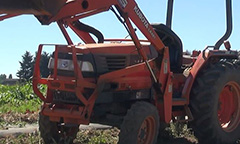
Food Farming in Rapidly Urbanizing Southwest Washington
Scientist: Judith Wait, School of the Environment (Vancouver)
Reporters: Shane Michard and James Cador, Murrow College of Communication (Pullman)
Other News
CEREO moves, new building dedication
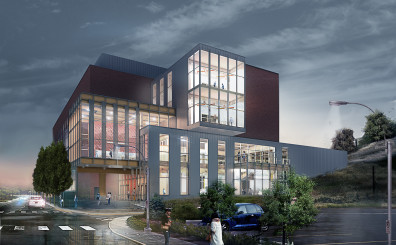 The Paccar Environmental Technology Building (PETB) is now home to CEREO and a number of other WSU centers, programs and laboratories that engage in interdisciplinary research and education in renewable materials, sustainable design, water quality, and atmospheric research.
Designed to be a gold-certified LEED building, this new space incorporates and showcases a wide array of green building technology, from permeable pavement to wood composite materials, in order to reduce it’s environmental footprint. Shared by a diverse community of WSU researchers, this new building will serve as a hub for collaborative, environmental innovation and solutions to complex problems facing society today.
The PETB dedication will occur on May 5, 2016 at 5:30pm on the Pullman campus.
Recognition for NSPIRE faculty and students
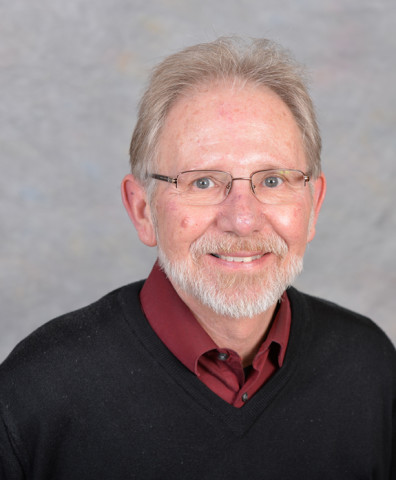 Congratulations are in order for Steven Stehr, Associate Professor in the School of Politics, Philosophy and Public Affairs and key faculty member in the NSPIRE graduate training program, who has been awarded the College of Arts and Sciences “Excellence in Graduate Student Advising and Mentoring Award for 2016”.
CEREO survey now open
As we prepare for the next academic year, we would like our CEREO Affiliates to share their thoughts on what types of activities, services and programming have been, and will be, most helpful as they pursue their environmental research, education and outreach goals. We encourage everyone to provide input using the survey below.
UPCOMING OPPORTUNITIES
GENERAL OPPORTUNITIES
UCOWR/NIWR Annual Water Resources Conference– Abstracts due April 18, 2016
The Universities Council on Water Resources (UCOWR) and the National Institutes for Water Resources (NIWR) are holding their annual water resources conference at the Hilton Pensacola Beach Hotel in Pensacola Beach, Florida on June 21-23, 2016. Abstracts for this conference (300 word limit) should be sent directly to Melissa Pind (mpind@siu.edu)
FACULTY OPPORTUNITIES
NIH Call for Proposals: Research to Action- Assessing and Addressing Community Exposures – Applications due June 5, 2016
This Funding Opportunity Announcement encourages applications using community-engaged research methods to investigate the potential health risks of environmental exposures of concern to the community and to implement an environmental public health action plan based on research findings to prevent or reduce exposure to harmful environmental exposures and improve the health of a community.
Improving Graduate Student Preparedness for Entering the Workforce, Opportunities for Supplemental Support– Due dates vary by Directorate
Supplemental funding is available in FY 2016 and FY 2017 to support science and engineering doctoral students so that they can acquire the knowledge, experience, and skills needed for highly productive careers, inside and outside of academe. NSF will consider support for supplements to existing research awards to enhance professional development opportunities for students in PhD programs as described by each Directorate/Office.
STUDENT OPPORTUNITIES
2016 Water Initiative for the Future Conference – Abstracts due April 18, 2016
The Water Research Centre is hosting an international, inter- and multi-disciplinary graduate student conference on water at the Queen’s University in Kingston, ON, Canada from July 27-29, 2016. If you are a graduate student who is interested in water issues or research, you are encouraged to attend.